
Let's address the elephant in the room first
You've spent time alone. Maybe months, maybe years. You've figured out exactly what works for your body. You know your rhythm, your preferences, your sweet spots. Then someone new enters the picture, and suddenly you're wondering: do I bring my lemon vibrator into this? Will they think I'm not satisfied with them? Should I pretend I didn't discover this whole part of myself while we weren't together?
Here's the reality: introducing lemon vibrators to a new partnership is actually one of the clearest ways to signal that you're confident in your own pleasure and genuinely excited to share intimacy with them. That's attractive. Full stop.
Why this moment feels different than you think
There's a difference between reintroducing toys after being single and introducing them for the first time in a relationship. When you've already been using a lemon clitoral vibrator solo, you're not asking permission or seeking approval. You're inviting someone into something you already know and love. That distinction matters because it shifts the emotional tenor from "I need this to feel something" to "I want to share this with you."
Most people who've been single and using clitoral vibrators report one consistent worry: will a new partner feel replaced or inadequate? The answer is almost always no, assuming you communicate. Partners who care about your pleasure typically find it genuinely hot that you know what you want. Research on long-term couples shows that partners who use toys together report higher satisfaction and less sexual friction overall. You're not competing with your vibrator. You're adding a tool that makes the whole experience better for both of you.
The conversation you need to have (and when)
Timing matters. This isn't a first-date conversation, but it also shouldn't be a surprise mid-session. Sweet spot? Somewhere between "we're clearly going to be intimate" and "we're about to be intimate right now."
One of the easiest openings is genuinely straightforward: "I want to be honest about something that's part of my sexuality. I've been using a lemon vibrator while I was single, and I really love it. I'm wondering if you'd be open to exploring that together." You're not asking permission. You're sharing information and extending an invitation.
If they respond with hesitation, that's information too. Some common concerns:
"Will it hurt?" No. Lemon vibrators work with gentle suction rather than direct vibration. They're actually easier on sensitive tissue than many partners' hands.
"Does that mean I'm not enough?" This one deserves a real answer, not reassurance theater. Say something like: "It's not about you not being enough. It's about adding another dimension to what we do together. Think of it like the difference between having a partner massage you and getting a deep tissue massage. Both are good. Different."
"I'm not sure how I feel about it." That's fair. You can offer: "We don't need to use it tonight. But I'd love to explore it with you when you're ready." Then actually let them take their time.
How to actually introduce it into your intimate time
First session together? Keep it simple. You use it solo while they're present, watching. This isn't performance. It's showing them what you enjoy. You're giving them a roadmap.
Next step: they can hold it. This shifts the dynamic without much complexity. They're controlling the pressure and speed, but you're directing where and how it touches. This is collaborative without being overwhelming.
From there, you can experiment with them inside you while you use the lemon vibrator on your clitoris. Or they can use it on you while you focus on other sensations. The joy of lemon vibrators is their versatility. They work solo, partnered, with penetration, without it.
What changes when you're using toys together
Your arousal might build faster. That's not a bad thing. It just means you might need to slow down or pause more often to stay connected with your partner. Communication during sex sounds clinical until you actually try it. "A bit more pressure" or "slower, please" or "pause for a second" becomes intimate if you're genuinely listening.
Orgasm timing often shifts. Some people find they come faster with a partner present. Others take longer because the nervous system is processing more information. Neither is wrong. If timing becomes an issue, this is where understanding how to use lemon vibrators when you and your partner have different orgasm speeds becomes useful. You're not trying to sync perfectly. You're trying to stay connected.
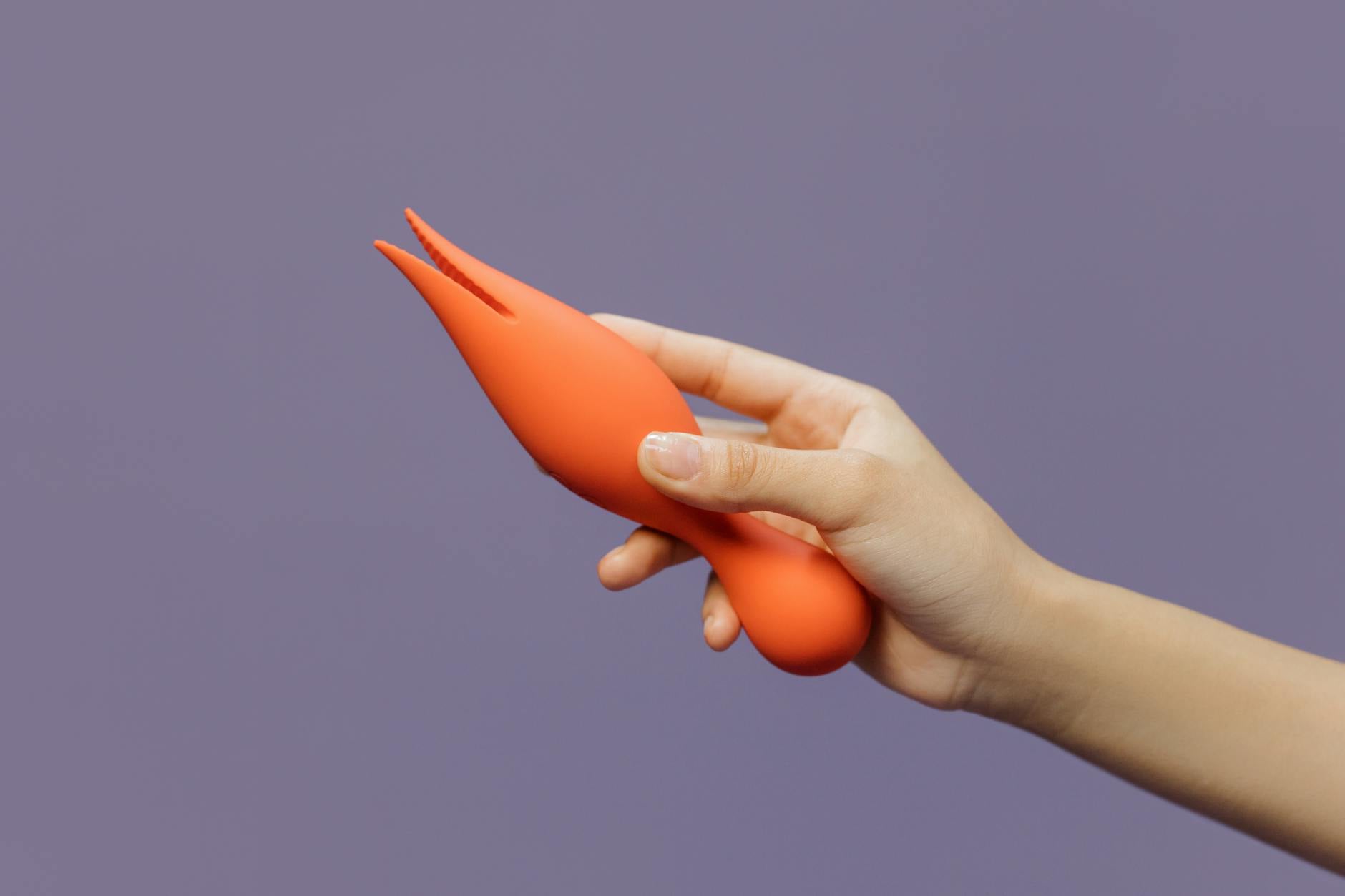
Photo by cottonbro studio on Pexels
The emotions that usually show up
Vulnerability is the biggest one. You're showing someone a part of yourself that you've been private about. That takes courage. A partner who responds with curiosity or genuine interest rather than defensiveness is someone worth keeping around.
Sometimes guilt appears. You might feel like you "should" have mentioned this earlier, or like you're introducing something too kinky, or like you're being too demanding. You're not. You're being honest. Honesty is the opposite of demanding.
Excitement is the other one. For a lot of people, sharing something that used to be solo pleasure with a partner who's genuinely into it is genuinely hot. That's worth noticing and savoring.
When to keep your lemon vibrator solo
Just because you're partnered doesn't mean you stop using toys alone. Solo pleasure isn't replaced by partnered pleasure. It's a different thing. You might actually find that how lemon vibrators work on sensitive clitoris becomes even clearer once you're not comparing it to partnered sensation.
Solo sessions also give you a chance to keep learning your own body. Partnered sex is wonderful, but it's not the only sex worth having. Protecting time for your own pleasure, with your lemon clitoral vibrator, is protecting part of your relationship. It keeps you grounded in what feels good specifically for you.
Signs this is going well
Your partner asks about it without you bringing it up. They suggest using it. They're curious about different settings or approaches. They notice what gets you going and remember it next time. These are signs they're genuinely invested in your pleasure, not just tolerating a toy.
You feel more relaxed, not less. If introducing toys makes you tense up or feel judged, that's a signal to have another conversation or consider whether this partnership is actually serving you.
Your solo sessions feel distinct, not like a substitute for partnered time. Both matter. Neither threatens the other.
If it doesn't go as planned
Sometimes a partner says no, and it stays no. That's a choice they're allowed to make, and it's information about compatibility. You get to decide if you're okay with that. Some people are, some aren't.
More often, someone needs time. They might feel insecure at first, then curious a few weeks later. Patience usually wins over pressure.
If a partner becomes hostile or shaming about your sexuality, that's a different problem. That's not about toys. That's about them not respecting you. That's worth addressing directly or exiting.
FAQ
Can I use a lemon vibrator if my partner is inside me?
Yes, absolutely. The clitoral suction from lemon vibrators doesn't interfere with penetration. Many people find that combination creates intensity that neither sensation alone provides. Just start with lower settings and work up.
What if my new partner is more into toys than I am?
That's actually great. It means you can both explore without one person dragging the other along. You might discover you like things together that you wouldn't have tried solo.
Is it weird to let my partner hold the lemon vibrator?
No. Some people actually prefer having a partner control it because they can focus entirely on sensation without managing the device. Others prefer controlling it themselves. Both are normal. You get to have a preference.
Should I hide my lemon vibrator from my new partner?
Eventually, no. If the relationship is heading toward genuine intimacy, hiding a core part of your sexuality usually creates problems. It's not about oversharing on date two. It's about being honest as things progress.
What if we have different comfort levels with toys?
This is where how to use lemon vibrators for better foreplay when rebuilding physical connection with your partner becomes relevant. You don't need to be at the exact same comfort level. You just need to respect each other's boundaries while gently expanding them together.
Can toys actually improve a new relationship?
Yes, when there's good communication. Toys force a conversation about pleasure that a lot of couples never have. That conversation, done right, strengthens everything else.
The real takeaway
You spent time learning your body alone. That's not something to hide or feel embarrassed about. It's something to bring into your new partnership as a gift. You know what works. You're inviting someone to participate in that knowledge. That's generosity, not neediness.
The right partner will see it that way. And if they don't? You already know how to take care of yourself. That's the real win.
If you're navigating the emotional side of introducing toys into a new relationship and want to talk through specific concerns, reach out. Sometimes having a space to work through these conversations outside the bedroom makes them easier inside it.